
My $150 OTC garage air compressor vs a $1,000 industrial one: a year of real work
My buddy runs a small detail shop. I've got a 2-car home garage. We did a year-long side-by-side: my $150 OTC 6-gallon hot-dog against his $1,000 Industrial Air 60-gallon vertical. Here's the honest verdict on whether you actually need the big one.
Who needs the $1,000 tier
Anyone running a pneumatic tool for more than 30 seconds at a time on a regular basis. That means: HVLP paint guns for whole panels, die grinders for serious metalwork, sandblasters, framing nailers shooting more than a few nails an hour. The 60-gallon tank means you finish the job before the motor cycles. The CFM (around 11 at 90 PSI on a typical 5HP) means tools run at full performance instead of half-strangled.
If your tool list is impact wrench, brad nailer, tire inflator, blow gun — what 90% of home garage use looks like — the big compressor is dead weight. It costs 6x the price, takes up the footprint of a small refrigerator, needs a 240V outlet, and most of its tank capacity sits idle.
What surprised me about the $150 OTC after a year
It handled more than I expected. Tire rotations, brake jobs with a 1/2" impact at 100 PSI, brad nailer trim work, the occasional die grinder for cleaning weld spatter. The cycle time is the trade-off — about 90 seconds of work then 2 minutes of recovery. You learn to do prep work during the wait.
What it can't do: paint a panel, run a sandblaster, drive a framing nailer at framing pace. I tried a cheap HVLP gun on a door once. The compressor couldn't keep up, the pressure dropped mid-spray, and I got an uneven finish. Lesson learned.
The three jobs where you regret the cheap one
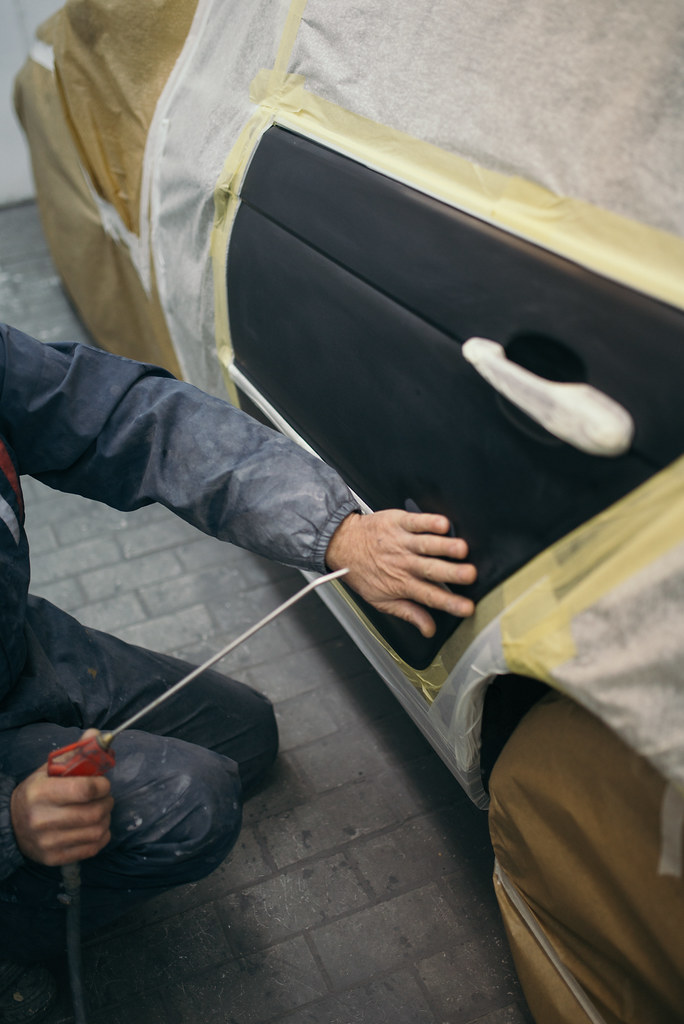
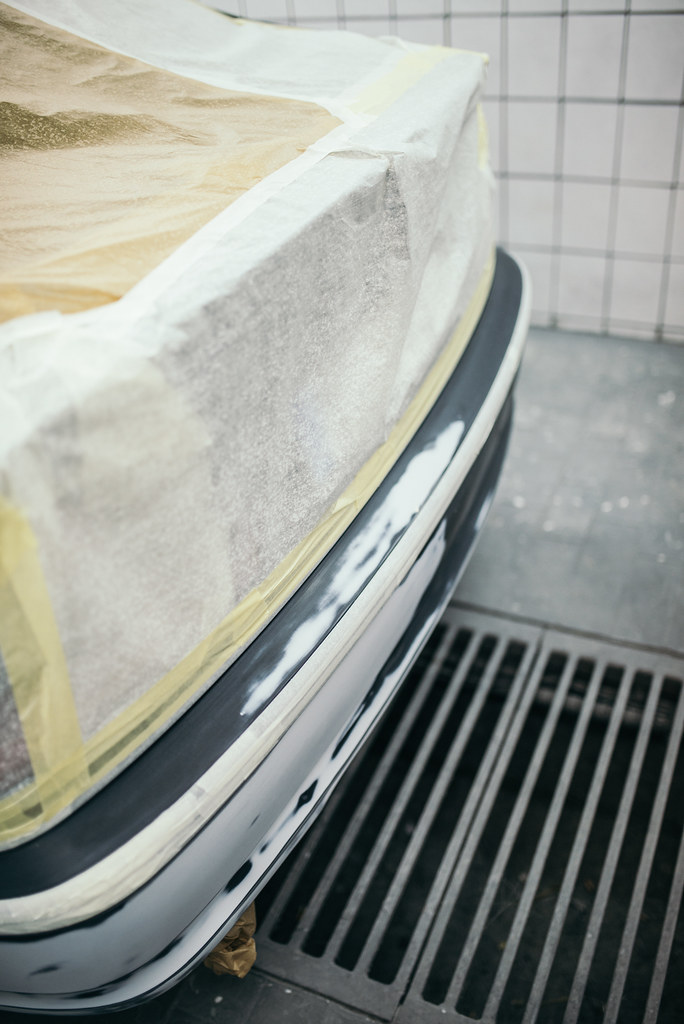
First, painting. Any panel painting wants a 60-gallon tank minimum. The pressure has to stay steady across a 30-second pass or your finish goes inconsistent. No 6-gallon hot dog gets there.
Second, removing rusted-on suspension bolts with a 3/4" impact. The big impacts pull 7-9 CFM at 90 PSI sustained. My hot dog gives them about 60% of what they want. They break free eventually; on the industrial they break free in 2 seconds.
Third, sandblasting anything bigger than a bracket. A pressure pot sandblaster wants 10-15 CFM continuous. The hot dog wheezes. The industrial barely notices.
What I actually do in my garage
Keep the OTC for daily work. When I need to paint or use the heavy impact, I drive over to my buddy's shop. The cost of the industrial compressor isn't just the $1,000 — it's the $200/year on the 240V circuit install, the foot-print, and the noise. For a 2-3x-a-year use case, borrowing is the right answer.
If you genuinely need painting capacity at home and don't have a buddy, the Quincy QT-54 at around $1,300 is the gold-standard 5HP 60-gallon. Will last 30 years with basic maintenance. Don't buy the no-name vertical compressors for $700 — the motors fail in year four and you can't get parts.
The compressor I'd skip entirely
The "ultra-quiet pancakes" in the $250 range. They're a $150 compressor with a $100 marketing premium for the noise difference. If quiet matters, get the California Air Tools 8010 at $260 — it actually delivers on the quiet claim at 60 dB. The other "quiet" units in this range are around 75 dB, which isn't quiet enough to matter.
For most home garages: the $150 hot dog is the right starting point. Upgrade only when a specific job demands it. Buying ahead of need is how garages fill up with $400 of equipment that gets used twice a year.
Ready to shop? Compare Auto across stores →