How to Buy a Fishing Boat: A Beginner's Guide

Selecting and acquiring the ideal fishing boat is a real art for someone who's been boating for years — but for a first-timer, it can feel genuinely daunting. There's a huge range of boats, a lot of money at stake, and ongoing costs beyond the purchase price. Get it right, though, and a fishing boat opens up a world of water and fish you simply can't reach from shore. The key is choosing a boat matched to where and how you'll actually fish, not just the one that looks best at the dealer. Here's a beginner's guide to buying a fishing boat.
Match the boat to your waters
The single most important factor is where you'll be fishing, because different waters demand very different boats. Calm lakes and rivers suit small, simple boats like jon boats and bass boats; large lakes and bays need something bigger and more stable; and open ocean fishing requires a seaworthy boat built to handle waves and weather. Buying a boat unsuited to your waters is either dangerous (too small for rough water) or wasteful (too much boat for a small lake). So start by honestly assessing the waters you'll fish most, and let that guide the type and size of boat you consider. The water dictates the boat.
Match it to your fishing style
How you like to fish matters as much as where. Different boats are built for different styles: bass boats for casting in freshwater, center-console boats for saltwater and offshore, pontoon boats for relaxed family fishing, and so on. Think about how many people typically fish with you, whether you want to stand and cast or troll, how much gear you carry, and whether comfort or pure fishing function matters more. A boat that fits your actual fishing style makes every trip better, while a mismatch leaves you constantly working around the boat. Picture your typical fishing day and choose a boat that suits it.
New vs. used
One big early decision is new versus used. A new boat offers the latest features, a warranty, and no hidden history, but at a premium and with steep early depreciation. A used boat costs far less and lets someone else absorb the depreciation, but requires careful inspection to avoid inheriting problems. For many first-time buyers, a well-maintained used boat is the smart, economical choice — but have it inspected by a marine mechanic and check the hull and especially the engine carefully, since engine problems are expensive. Either way, research the specific make and model's reputation for reliability before committing.

Budget for the true cost of ownership
The purchase price is only the beginning, so budget for the full cost of owning a boat. Beyond the boat itself, factor in a trailer (and a vehicle that can tow it), insurance, registration, fuel, regular maintenance and winterization, storage or mooring fees, and safety equipment. These ongoing costs add up significantly, and many first-time buyers are caught out by them. Be realistic about what you can afford to run, not just buy, so your dream boat doesn't become a financial burden. A boat you can comfortably afford to maintain and use is far better than a bigger one that strains your budget every season.
Don't forget safety equipment
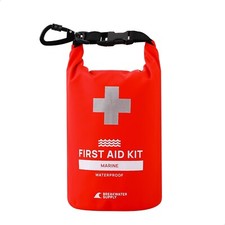
Safety gear isn't optional — it's legally required and genuinely life-saving. Every boat needs properly-fitted life jackets for everyone aboard, plus a throwable flotation device, fire extinguisher, signaling devices (flares, horn), navigation lights, and a marine first aid kit. Check your area's specific legal requirements, which vary. Budget for this equipment as part of the purchase, never an afterthought. A waterproof dry bag keeps your phone, keys, and documents safe aboard. Good safety equipment, properly maintained and actually used, is what keeps a fun day on the water from turning into an emergency.
Inspect and test before buying
Never buy a boat — especially a used one — without thoroughly inspecting and, ideally, sea-trialing it. Check the hull for damage and repairs, inspect the engine and have it tested (a marine survey is well worth it for a bigger purchase), examine the electrical systems, trailer, and all equipment, and confirm everything works. A test run on the water reveals problems a static inspection misses — how the engine runs, how the boat handles, whether anything's amiss. The cost of a professional inspection is tiny compared to the cost of buying a boat with hidden, expensive problems. Take your time and verify before you commit.
Start modest and learn
For a first boat, there's real wisdom in starting modest. A smaller, simpler, less expensive boat lets you learn boat handling, maintenance, and what you actually want from a boat without a huge financial commitment — and you can always upgrade later once you know your preferences. Many experienced boaters wish they'd started smaller rather than buying too much boat too soon. Learn the ropes on something manageable, get comfortable with trailering, launching, and maintenance, and let your real-world experience guide your next, more informed purchase. Starting modest is rarely a regret; overbuying often is.

What I'd skip
Skip a boat unsuited to your waters — too small is dangerous, too big is wasteful. Skip budgeting only for the purchase price; the trailer, insurance, fuel, and maintenance add up. Skip buying a used boat without a thorough inspection and engine test. And skip overbuying your first boat; start modest and upgrade once you know what you want.
The honest answer
Buying a fishing boat well means matching it to your waters and fishing style first, then weighing new versus used, budgeting honestly for the full cost of ownership (trailer, insurance, fuel, maintenance), and never skipping the safety equipment or a thorough pre-purchase inspection. For a first boat, start modest and learn before upgrading. Take your time, do the homework, and the right fishing boat becomes a gateway to years of fishing you could never do from shore — rather than an expensive lesson in what not to buy.
Ready to shop? Compare marine first aid kit across stores →