
The $120 cordless impact wrench that finally made me forget my pneumatic one
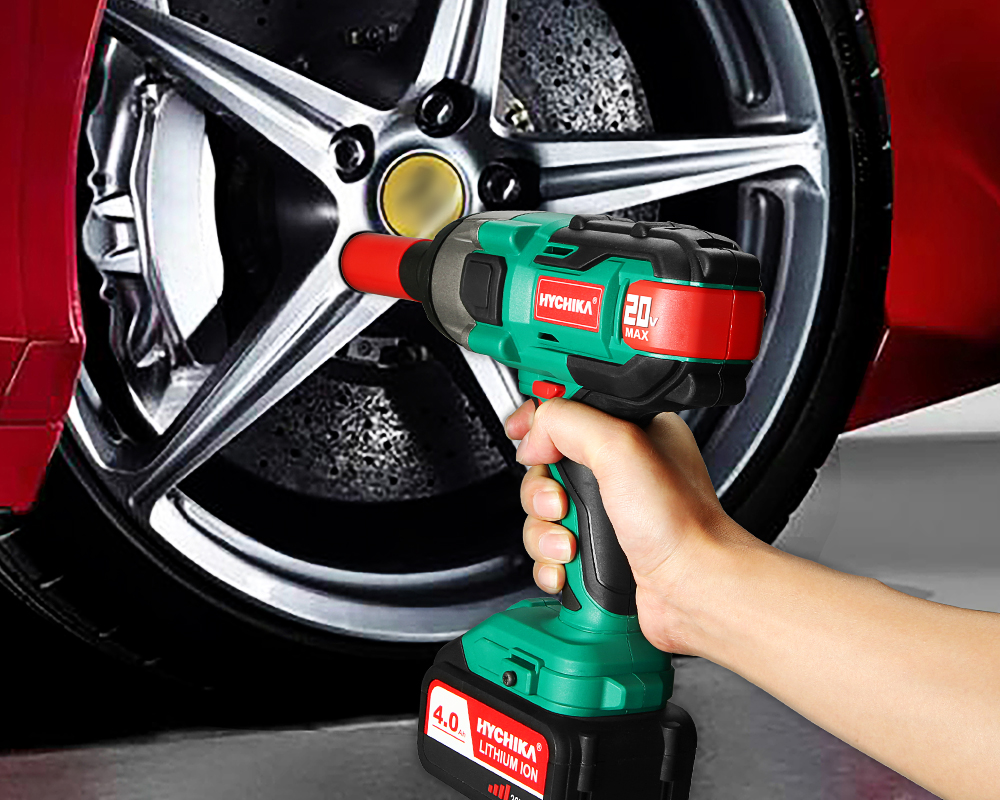
I spent eight years dragging a pneumatic impact wrench across the garage floor every time I rotated tires. Last October I bought a $120 Ryobi PBLIW01 brushless 1/2" and I haven't touched the pneumatic since. Here's what made it stick.
Who actually needs a cordless impact
Anyone who's loosened a wheel nut by hand or with a breaker bar and decided there has to be a better way. A cordless impact rated 400+ ft-lbs handles lug nuts on every passenger car and most light trucks without fighting you. If you do your own tire swaps twice a year, brake jobs once a year, suspension work occasionally — this is the single highest-leverage tool purchase in a home garage.
Skip it if you're only working on bicycles and lawn equipment. A regular cordless ratchet at 50 ft-lbs covers that work for half the money and weighs less. Don't buy an impact for jobs that don't need impact.
What the spec sheet actually means
Three numbers matter: breakaway torque, fastening torque, and battery platform.
Breakaway torque is what the tool can loosen. For passenger cars you want 400 ft-lbs minimum because over-torqued lug nuts at the tire shop routinely sit at 200-250 ft-lbs and you need 1.5-2x that to break them loose without straining. The Ryobi PBLIW01 delivers 600 ft-lbs breakaway and it has never failed to break a lug nut for me.
Fastening torque is what it tightens to. Largely irrelevant — you should be using a torque wrench for final tightening anyway. An impact at full bore over-tightens everything. Use the impact to snug, then a click-type torque wrench to spec.
Battery platform matters more than any spec. If you already own Ryobi tools, stay Ryobi — battery interchange saves $80+ per new tool. Same for Milwaukee M18, DeWalt 20V, Makita 18V. Don't switch platforms for a single tool unless the tool platform is genuinely better — which for impacts in 2026, none of them are.
Where the $400 brand-name impacts waste your money
The Milwaukee M18 Fuel at $349 and the DeWalt DCF899 at $329 both rate 1,000+ ft-lbs of breakaway torque. Yes, they break stuck bolts on rusted-out trailer suspensions that my Ryobi can't. For a home garage where the heaviest job is a brake caliper — that's not your problem. You're paying 3x for capability you'll use once a decade.
The Ryobi and the Bosch 18V brushless at similar price both hit 500-600 ft-lbs and that's enough for 95% of home work. Save the $200, buy a torque wrench and a set of impact sockets with the savings.
The pneumatic vs cordless math
Pneumatic impacts cost less ($60-150) but require a compressor. A $300 compressor plus $80 impact plus hose is $400 in pneumatic kit. A $120 cordless plus a battery you already own is $120. Pneumatic delivers more torque per dollar but you're tethered to a hose and an outlet.
The honest test: how often do you actually break a bolt the cordless can't? In my garage, twice in a year. Both were rusted exhaust bolts that wanted heat anyway. The pneumatic wouldn't have helped — they wanted a propane torch, not more torque.
The accessories that actually matter
Impact-rated sockets. Standard chrome sockets crack under impact. A 14-piece 1/2" impact socket set for $40 covers every passenger-car lug nut and most suspension bolts.
A pair of torque sticks for $25 if you're rotating tires regularly — they cap impact torque at a set value (usually 80 or 100 ft-lbs) so you stop over-tightening lug nuts and over-stressing studs. They don't replace a click-type torque wrench but they get you close.
That's the whole kit. $120 impact, $40 sockets, $25 torque sticks, $35 click-type torque wrench. $220 of tools and you're doing tire rotations in eight minutes instead of forty. The pneumatic stays on the shelf. Mine has gathered dust for nine months now, and I'm not bringing it back.
Ready to shop? Compare Auto across stores →