
Self-Control and Money: Beating the Urge to Splurge in the Moment

There's a specific feeling I used to get the moment money landed, a tax refund, a bonus, even just payday, this almost physical itch to go spend it. Right now. On anything shiny that caught my eye. I'd tell myself I earned it, swipe the card, and feel great for about a day. Then the money was gone and the thing was just another object in my house. That itch has a name, it's a failure of self-control, and beating it is the most direct lever I've found on my finances.
I want to draw a line here, because this gets confused with discipline, and they're not the same. Discipline is the long game, the systems and habits you build over years. Self-control is the thing that happens in a single moment, in the aisle, with the card in your hand. This piece is about that moment, the small acute battle, because if you keep losing it, no amount of long-term planning survives.
The itch is real, and so is its cost
The mistake isn't wanting things. The mistake is the reflex to satisfy the want instantly, before you've thought about it at all. People come into a bit of money and rush to spend it on the first thing their eyes land on. It feels like reward. It's actually the most reliable way to stay broke.
What makes it dangerous is that it ignores the future entirely. In the moment of splurging, the future doesn't exist, there's only the want and the means to satisfy it. Self-control is nothing more than holding the future in your mind while the present is screaming. The shiny new thing fades and rusts; the money, had you kept it, would still be there. I keep a one-line note in my budget planner notebook reminding me of exactly that, and I read it when the itch hits.
Never buy on pure impulse
My first and hardest rule: nothing gets bought in the heat of wanting it. When I feel the pull, I make myself ask one question, do I actually need this, or can it wait until I genuinely do? Most of the time, "it can wait" is the honest answer, and "later" quietly turns into "never," and I don't miss it.

The practical version of this is a waiting period. For anything beyond a trivial amount, I leave the store, or close the tab, and give it a day. If I still want it tomorrow and it fits the plan, fine. The wait isn't punishment, it's just enough distance for the urge to lose its grip. A small cash envelope budgeting system helps here too, when the money is physically allocated, raiding it for an impulse feels like the theft it actually is.
Separate what you need from what you want
Almost every impulse purchase is a want wearing the costume of a need. The store is very good at this, everything is framed as something you can't live without. Slowing down long enough to ask "is this a need or a want?" breaks the spell more often than not.
I'm not anti-want. Wants are fine, in their place, planned for, paid from money set aside for exactly that. What I've learned to avoid is spending heavily on something I'll regret, the thing that looked essential under store lighting and looks pointless at home. When I do allow a want, I want it to be a choice, not a reflex. Keeping a written list of what I actually need in a magnetic shopping list pad gives the reflex something to bump against.
Find a role model and copy them
The thing that helped me most was almost embarrassing in its simplicity: I found someone who was good with money and started copying them. Watching a friend who lives well below their means, who doesn't flinch when something's on sale, who can walk past a deal, made self-control feel possible instead of like deprivation.

Seeing someone else actually live it does something that no advice can. It proves the behavior is normal and survivable, even comfortable. I asked questions, noticed their habits, and quietly adopted the ones that fit. A shared personal finance organizer or even just comparing notes turned an abstract virtue into a real pattern I could imitate.
Build the moment of pause into your day
Self-control isn't a fixed amount of willpower you either have or don't. It's a muscle, and the way you train it is by inserting friction between the urge and the action. The pause before buying, the question about need versus want, the role model in the back of your mind, these are all just ways of putting a beat between feeling and doing.
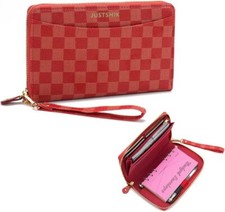
Financial success starts with a conscious effort to control your own spending. Not a grand plan, not a windfall, just the repeated small act of not buying the thing the instant you want it. Try these in your daily life and let them grow on you. Mine started shaky and got automatic, and the money that used to vanish now stays put. I track every win and slip in a expense tracker ledger, because seeing the pattern is what keeps me honest, and a slim minimalist wallet that holds less cash quietly makes the in-the-moment battle easier to win.
Ready to shop? Compare cash envelope budgeting system across stores → 📚 Or browse investing & money courses in Digital Goods →