Low-Cost Advertising That Actually Builds a Home Business

The first thing most new home business owners do when they think about advertising is either freeze (because it seems expensive) or spend money on ads before they understand their customer well enough to make those ads work. There's a middle path that I've seen produce better results for early-stage home businesses than either of those options.
The credibility problem that free coverage solves
Paid advertising makes an implicit claim about your business — "we're good enough to pay to tell you about." Editorial coverage makes a different claim — "someone independent decided this was worth writing about." For a home business without a track record, that second kind of credibility is significantly more valuable and it costs nothing except the effort of pursuing it.
Local journalists, community bloggers, and neighborhood newsletters are genuinely looking for stories. A home business launch isn't a story — but a home business that does something interesting for the community might be. Sponsor a small local event, run a contest, partner with a school or charity. Give the journalist a reason to write that isn't just "new business opens." The resulting coverage will do more for your legitimacy with local customers than an equivalent paid ad.
Business cards still work
I know this sounds like advice from 2005. It's still true. A business card that's well-designed and communicates clearly what you do is a physical reminder in someone's hand after every in-person interaction. Online printing services now let you order high-quality cards in small runs at very low cost — there's no reason to have cards that look like you made them yourself in a hurry.
Give them out without hesitation. The person who doesn't need your service might hand the card to someone who does. The failure mode with cards is having them and not distributing them, not having too many.

Flyers targeted to specific locations
A badly targeted flyer campaign is worthless. A well-targeted one can work very well. The key is thinking specifically about where your ideal clients actually spend time — a dog walker's flyer at a vet clinic, a bookkeeper's card at a small business association meeting, a tutoring flyer on a community college board. flyer printing for a small run is cheap; the value comes from accurate placement rather than volume.
One practical tip: ask permission before posting anywhere, and follow up to replace sun-faded or torn flyers. A visible, maintained flyer in a high-traffic location beats twenty that disappear within a week.
Email outreach at a human scale
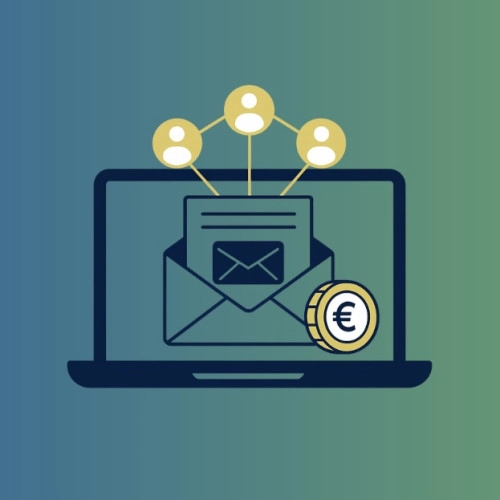
For service businesses especially, there's a kind of cold outreach that works when it's personalized and relevant, and completely fails when it's template spam. A short email to ten people in your city who might genuinely benefit from what you do — written individually, mentioning something specific to each person — gets real replies. The same template sent to a hundred people gets flagged as spam.
An email marketing tool is most useful slightly later, when you have a list of existing customers and prospects to communicate with. In the earliest stage, direct personal outreach beats broadcast by a large margin.
Online presence as a credibility anchor
Every advertising effort you do — cards, flyers, word of mouth — eventually sends people to look you up online. What they find there determines whether the interest converts into contact. A website that loads fast, explains clearly what you do, shows some evidence that you're real (a photo, a physical address if appropriate, a phone number), and makes it easy to reach you is the minimum viable online presence.

A basic site built on a website builder platform is enough. It doesn't need to be elaborate. It needs to be trustworthy at a glance.
What I'd skip
I'd skip any advertising format where you can't measure whether it's producing customers. If you can't trace a sale back to a channel, you can't know whether to continue investing in that channel. This rules out most broad brand awareness plays for a home business — those are tools for companies with large budgets and long time horizons, neither of which applies at the start.
The bottom line: the most effective advertising for a home business in its first year is relationship-based, locally grounded, and honest. It costs more time than money, and the results compound rather than spike and fade.
Ready to shop? Compare Online Business across stores → 📚 Or browse courses & software in Digital Goods →